The Daniel 6 Blueprint: Prayer Habits That Don’t Collapse in Crisis
When you can’t see a way out, and the pressure feels personal, Daniel’s quiet habit exposes a louder truth: darkness doesn’t get the final word.
-
10 When Daniel knew that the document had been signed, he went to his house where he had windows in his upper chamber open toward Jerusalem. He got down on his knees three times a day and prayed and gave thanks before his God, as he had done previously. 11 Then these men came by agreement and found Daniel making petition and plea before his God. 12 Then they came near and said before the king, concerning the injunction, “O king! Did you not sign an injunction, that anyone who makes petition to any god or man within thirty days except to you, O king, shall be cast into the den of lions?” The king answered and said, “The thing stands fast, according to the law of the Medes and Persians, which cannot be revoked.” 13 Then they answered and said before the king, “Daniel, who is one of the exiles from Judah, pays no attention to you, O king, or the injunction you have signed, but makes his petition three times a day.”
14 Then the king, when he heard these words, was much distressed and set his mind to deliver Daniel. And he labored till the sun went down to rescue him. 15 Then these men came by agreement to the king and said to the king, “Know, O king, that it is a law of the Medes and Persians that no injunction or ordinance that the king establishes can be changed.”
16 Then the king commanded, and Daniel was brought and cast into the den of lions. The king declared[a] to Daniel, “May your God, whom you serve continually, deliver you!” 17 And a stone was brought and laid on the mouth of the den, and the king sealed it with his own signet and with the signet of his lords, that nothing might be changed concerning Daniel. 18 Then the king went to his palace and spent the night fasting; no diversions were brought to him, and sleep fled from him.
19 Then, at break of day, the king arose and went in haste to the den of lions. 20 As he came near to the den where Daniel was, he cried out in a tone of anguish. The king declared to Daniel, “O Daniel, servant of the living God, has your God, whom you serve continually, been able to deliver you from the lions?” 21 Then Daniel said to the king, “O king, live forever! 22 My God sent his angel and shut the lions' mouths, and they have not harmed me, because I was found blameless before him; and also before you, O king, I have done no harm.” 23 Then the king was exceedingly glad, and commanded that Daniel be taken up out of the den. So Daniel was taken up out of the den, and no kind of harm was found on him, because he had trusted in his God.
Victorious Prayer in Dark Times: Lessons from Daniel’s Lion’s Den
Deep in each of our hearts, there is a current. We understand some aspects of our hearts, but there are depths beyond our own understanding. Scripture teaches us that above all things, our hearts are deceitful (Jeremiah 17:9). As God sees our hearts at their deepest level, we need Him to activate the currents of the Holy Spirit to flow, to nourish, to interrupt, to create new pathways and channels in the currents of our hearts for His glory.
This is what we see in the story of Daniel—a man who experienced victorious prayer in the darkest of times.
A Man of Great Promise
Many of us know Daniel from Sunday school stories about the lion’s den. But before we get to the lions, we need to understand who Daniel was. As a young man, Daniel was marked by great promise. He had a high IQ. He was a high achiever academically. He was full of wisdom—not just knowledge and understanding, but the ability to apply them correctly, which is what wisdom truly is. Daniel was exceptionally talented.
But now, as we encounter him in Daniel 6, he is well into adulthood and facing unique dynamics. Scripture says, “Daniel became distinguished above all the other high officials and satraps because an excellent spirit was in him, and the king planned to set him over the whole kingdom” (Daniel 6:3).
At this time, King Darius the Mede was ruling. Daniel, a Jewish man from Judah who was among the refugees, excelled above his contemporaries. King Darius appointed 120 satraps (high-ranking governors responsible for overseeing large provinces, collecting tribute, maintaining order, and acting as the king’s chief representative) over the kingdom. Above them were three supervisors, and Daniel was one of them. The king planned to set Daniel over the whole region.
The Seed of Dark Times
Here is where the problem began, and the seed of the dark times Daniel was about to enter. Other governors and officials were jealous of Daniel. People who were politically connected and craving influence resented that Daniel had been elevated, that he had such wisdom, and that he was highly favored by King Darius.
Daniel 6:4 tells us:
“The supervisors and satraps kept trying to find a basis for an accusation against Daniel in regard to his administration of the kingdom. However, they were unable to come up with an accusation or any evidence of corruption because he was trustworthy, and no neglect of duty or evidence of corruption could be found against him.”
Daniel had been such a godly man, such a wisdom-filled man from God on high, such an upstanding man that they could not find anything to use against him.
“Satan is like a rock climber. He needs cuts and protrusions on the rock in order to get a foothold. Jesus’ character, which perfectly displayed faith, humility, patience, and mercy, made him as smooth as a sheet of glass. He gave Satan absolutely nothing to grab.” Chris Tiegreen, author
While we are not elevating Daniel to the level of Jesus, Daniel’s enemies could not find anything to grab. So they decided to use Daniel’s walk with God against him by manipulating King Darius to create a law that would affect almost no one except Daniel.
The Trap Is Set
These jealous, politically connected officials approached the king: “Now, your majesty, please establish a decree and sign a document that cannot be changed according to the law of the Medes and Persians that cannot be revoked” (Daniel 6:8). The law stated that “whoever makes petition to any god or any man for 30 days except to you, O king, shall be cast into a den of lions” (Daniel 6:7).
King Darius had been manipulated into a trap. By creating a law that would affect almost no one except Daniel, those who were jealous and resentful plotted by deception to bring Daniel down. This reminds us that fallen human beings are capable of being very evil people, and that evil can mask itself with cleverness laced with deception. They made sure the law was written so that King Darius could not get around it.
Now, Daniel faced a great dilemma in which everything was exceedingly dark. There was no logical way out. He was facing consequences that ultimately meant death.
Daniel’s Response
So, what did Daniel do? Did he wallow in self-pity? Did he run to escapism? Did he pull a few friends together to gossip and slander about his enemies so that he could feel falsely validated?
Daniel 6:10 tells us exactly what he did:
“When Daniel learned that the document had been signed, he went to his house. It had windows on its upper story that opened toward Jerusalem. Three times a day he would get on his knees and pray and offer praise before his God. And he continued to do that just as he had been doing before this dark episode began to emerge over his life.”
All of us have experienced times in our lives that are very dark, with no earthly solution, or we may be in such a time right now. And because we live in a fallen world, there will be dark times ahead. God did not give us stories in the Bible to entertain us. He gave us these stories to equip us because we, too, will face times when there seems to be no logical way forward.
So let us learn from Daniel. How did he experience victorious prayer when 360 degrees all around him, lions were coming at him, and they were not just physical lions but human lions, and there was no logical way out?
[READ MORE: How to Pray Without Losing Heart]
Three Keys to Victorious Prayer in Dark Times
1) Daniel Already Had a Foundation
Daniel was facing lions. Yes, physical lions, but also lions in the form of people coming at him. Notice the wording in verse 10: “He continued to do that.” What is “that” in reference to? He continued to pray. He continued to praise. This was already the pattern he was living by. The text says “just as he had been doing before this episode.”
Daniel was already a man with a foundation in walking and communing with God. He had a foundation of ongoing communion with God.
You know what else fueled Daniel’s foundation? His past experience with God. Daniel had already seen God’s victory in dark times. In the preceding chapter, Daniel gave an interpretation to the previous king’s dreams, all emanating from his communion with God. Daniel knew about Shadrach, Meshach, and Abednego years ago and their experience in a blazing hot furnace, and he had seen God preserve them alive.
Daniel had some experiences that provided him with training. He was not starting at ground zero.
Kingdom axiom: To use spiritual weapons, which is what Daniel is doing in prayer and praise, and they are powerful, requires training. All the dark times you may have navigated in the past, when you leaned into God, and you saw God work, when you look back in your life, be mindful that in the love and sovereignty of God, those experiences in the classroom—your circumstance is your classroom—are intended for your training.
If you do not have those experiences in your life yet, let me encourage you: if you have not allowed God to build a foundation in your life, then start building today. Start building in prayer. Start building by studying the Word of God. Start building by praying the Word of God.
Draw from God’s Word.
Draw strength from communion with God.
Draw strength from what God has done in your past.
[READ MORE: How Does Scripture Transform Our Prayer?]
2) Daniel Knew How to Battle
When you are walking in darkness, in dark times, and lions are coming at you, when you find yourself in a situation that feels overwhelming, oppressive, or just evil spreading, that kind of territory brings vulnerabilities. It is easy to lose focus. You can become consumed by the size of your opposition, the darkness of the situation, or the urge to retaliate.
All of that kind of obsession moves you right where the enemy wants you, because he wants you to doubt God. He wants you to doubt the goodness and faithfulness of God as you lean into Him.
The enemy’s expertise lies in that old lie from Genesis: “Did God really say?” (Genesis 3:1). He plants doubt in your thinking. Doubt distorts the reality of God in your life. It moves you into paralysis mode. Doubt says there is no hope. Doubt says you’d better overcompensate and take control through the fallen patterns you used to use before you knew Jesus, or the fallen patterns you see modeled in many of the fallen people around you. Feelings begin to override what is true.
Doubt distorts reality by creating feelings of uncertainty, lack of conviction, uncertainty, indecision, hesitation, isolation, suspicion of others, and confusion.
Remember Peter? Peter saw Jesus walking on the water and said, “Jesus, let me do the same thing. Let me walk out there and join you.” Peter went out on the water, and you know what happened—he began to sink after he had walked on water for a short period. What did Jesus say when He grabbed him by the hand and pulled him into the boat? He asked a simple question: “Why did you doubt?” (Matthew 14:31).
In the original Greek, the word “doubt” in that context translates as “looking two ways at once.” In other words, Peter had one eye on the Lord and began to put his other eye on the storm. As Daniel prayed three times a day, he fought to keep his heart from looking two ways at once, but to look only to God Almighty.
This is why Isaiah wrote: “If you are walking in darkness without a ray of light, trust in the Lord, rely on your God” (Isaiah 50:10). That is what Daniel was leaning into. Or as 2 Samuel 22:29 declares, “You, O Lord, are my lamp. The Lord turns my darkness into light.”
This is where Daniel fought in victorious prayer during dark times, and that is how the lions were defeated.
Kingdom axiom: Living in the kingdom of God requires unnatural responses. The lions of this world will use all the tools of a fallen world, including intimidation, control, gossip, slander, manipulation, shame, and fear, to control people and situations. A believer battles differently. A believer responds unnaturally by going to God in prayer and praise, and by communing with the living God.
We battle in prayer, move in faith in God’s Word, live in humility, walk in patience, and exercise mercy toward people to diffuse situations. The whole strategy of the lions in your life is to intimidate you, to cause you to fear, and ultimately devour you. But faith and communion with God destroy fear.
When we talk about faith destroying fear, I am not speaking out of opinion; I am giving testimony out of conviction. God’s presence, which is perfect love, really does cast out fear (1 John 4:18). It is not make-believe, or preacher talk. That is what Daniel did: he walked in because he communed with God in faith and prayer, probably in the darkest hour of his life.
3) Daniel Experienced Loads of Assistance from the Spirit of God
Daniel prayed, and as he prayed and communed with God, his enemies reported him to the king. When the king heard this report, he was very upset but determined to save Daniel. Until sunset, he worked hard to rescue him (Daniel 6:14).
This is beautiful because King Darius so favored Daniel that he sought loopholes in his own law. And the source of that favor was Daniel’s relationship with God. Many times in Scripture, when you are walking closely with God, He will give you favor with certain people.
Darius was looking for a way to save Daniel and, at the same time, save face for himself. But Daniel’s enemies would not let up. They emphasized that Daniel was not truly one of them because he was in exile and captured from Judah. They claimed Daniel’s actions were disrespectful to the king and his law, declaring, “Daniel pays no attention to you, King Darius. Not only has he broken the law, but he does it three times every day” (Daniel 6:13).
All of this was said not to honor King Darius, but to eliminate Daniel, all because Daniel had become a rival and the target of their dark jealousy.
The king had no choice. Daniel was brought and thrown into the lion’s den. And the king said to Daniel, “May your God, whom you serve continually, rescue you” (Daniel 6:16).
Going Through the Trial
Take note of something paramount here: Daniel still had to go through the trial. That teaches us that sometimes trials get more difficult before they get better, but God is at work.
When David wrote Psalm 23, some scholars suggest his son Absalom may have been pursuing him to kill him at the time. Others say it may have been when he was running from Saul, who was out to kill him. Yet David was able to write these words: “You prepare a table before me in the presence of my enemies” (Psalm 23:5).
What did David know that we need to know? What is Daniel experiencing through prayer and praise in dark times that we need to know?
I am keenly aware that many of you have walked through very difficult circumstances. Some of you are in them right now. If at your next local church gathering, you took time for the congregation to share testimony, you would hear witnesses to God’s faithfulness. That would be my testimony as well. When I look forward, I often think, “God, are You in control?” But when I look back, I see, “Wow, God, You have been in control all along.”
“Trust in Him at all times—at all times, you people—pour out your heart before him. God is a refuge for us.” Psalm 62:8
If you have ever studied the Psalms, you know that about 40% of them are prayers and songs in good times, while about 40% are written in dark times when things are not going well, and you hear David and others cry out to God. If you do not think the Bible illustrates just how honest you can be with God in prayer, stay away from the Psalms. There is bold honesty about the emotions people navigate in dark times.
[READ MORE: How to Problem Solve With God]
God Saves Daniel
Daniel went into the lion’s den, and God miraculously saved him. King Darius rejoiced that Daniel was alive. He understood that he had been duped by evil men, and so King Darius sentenced each of them to death in the lion’s den.
There are great lessons for us in the scope of this story:
First, don’t always judge visible battles with visible signs. Daniel did not. As Ephesians teaches us, we are not just wrestling with flesh and blood, we are wrestling with unseen forces (Ephesians 6:12). Daniel recognized that and began to tap into a reality that reflects the ultimate reality available to you as a believer.
Second, seasons of darkness do not define everything for a believer. For a believer, you have hope, who is a Person to tap into. Daniel experienced the fullness of God in a very dark time. A season of darkness for a believer is not a zero-sum game. Daniel could have thrown his arms up and said, “I am sentenced to death. I am done.” But Daniel tapped into the Source.
Though God does not promise to preserve your earthly life in any and every circumstance, He does promise that He has taken the curse of sin at the cross so that new life is assured for you, no matter what happens. This is why the Son of God proclaims in Revelation 2:10, “Be faithful unto death, and I will give you a crown of everlasting life.”
For the believer, there is light at the end of darkness, whether it is in this life or the next. And for this ultimate reason, because of the resurrection of Jesus, you have hope. No matter what your circumstances, you have living hope. Hope is alive. He rose from the dead on the third day, and Scripture declares not only that He is alive, but He has also ascended to the right hand of the Father, where He is present in heaven. As the Bible declares, He is your mediator, your intercessor, your advocate. He is for you, not against you.
[READ MORE: A Light in the Darkness]
You Have Hope
Let the testimony of Daniel’s life rise up in your own. Let the reality of the hope of Jesus Christ live and reign in your understanding, in your circumstance, so that you recognize that no matter what darkness you are navigating, you have hope because God is at work in your circumstance to His glory.
Whatever lions are coming at you, kneel before the Lord as a step of faith and surrender them to Him. Ask God to work in this circumstance, work in your heart to take the posture of Daniel, and to see His victory in and through this season for His glory.
Jesus has opened the altar for people He loves so deeply to come and pray, to yield, to surrender, to know Him, to enjoy Him. Make room for Him. Just be with Him.
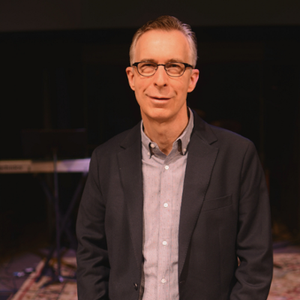
This blog post is adapted from a sermon preached by Paul Lawler, Senior Pastor at Christ Methodist Church in Memphis, Tennessee.
TL;DR
Daniel didn’t start praying when the lions showed up—he had a foundation of communion with God long before the crisis.
Dark seasons tempt you to look two ways at once (God + the storm); victorious prayer fights for a heart fixed on the Lord.
The Kingdom response is “unnatural”: instead of intimidation, control, or retaliation, believers battle in prayer, humility, patience, and mercy.
Deliverance may not mean avoiding the den—sometimes you still go through it—but God gives peace, presence, and ultimate victory (in this life or the next).