Are We Ready for What God Wants to Do Next?
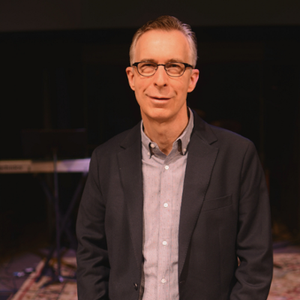
As Pastor Paul Lawler delivers his final sermon as Senior Pastor of Christ Methodist Church, he challenges the congregation to consider what it means to be ready for God's next chapter. Through Jesus' parable of the wineskins, he calls believers to hold fast to the unchanging gospel, remain teachable, and embrace their calling to make disciples.
-
36 He also told them a parable: “No one tears a piece from a new garment and puts it on an old garment. If he does, he will tear the new, and the piece from the new will not match the old. 37 And no one puts new wine into old wineskins. If he does, the new wine will burst the skins and it will be spilled, and the skins will be destroyed. 38 But new wine must be put into fresh wineskins. 39 And no one after drinking old wine desires new, for he says, ‘The old is good.’”[a]
Reformation, Revival, and the Call to Make Disciples
Jesus once told a short parable that has outlasted empires: “No one tears a piece from a new garment and puts it on an old garment. If he does, he will tear the new, and the piece from the new will not match the old. And no one puts new wine into old wineskins. If he does, the new wine will burst the skins, and it will be spilled, and the skins will be destroyed. But new wine must be put into fresh wineskins. And no one after drinking old wine desires new, for he says, ‘The old is good’” (Luke 5:36–39).
My responsibility whenever I open God’s Word is not to talk about myself or about whatever season a church may be walking through. It is to teach the Scriptures. But I have found, again and again, that when we come honestly to the Word of God, it speaks directly into the moment we are living in. That is how the Word of God has always worked. And I believe this little parable about wine and leather has something urgent to say to every one of us.
What Jesus Meant by Wineskins
In Jesus’ day, people carried their wine in skins, usually made from goat hide with the edges sewn tight to hold the liquid in. A new skin was soft and supple. As fresh wine fermented, it released gases and expanded, and a new wineskin could stretch with it without tearing or spoiling what was inside.
But once a skin had been stretched, it became an old wineskin. It had reached its limit. It had lost its flexibility. Pour fresh, fermenting wine into that stiff old leather, and the skin would crack and burst, ruining both the wine and the container. New wine must go into fresh wineskins.
Jesus uses this everyday image as a metaphor, and in its original setting the meaning was clear. The life of Jesus, His mercy shown to us on the cross, and His grace, which we have never earned, made known through His death, burial, resurrection, and ascension, all call for a new framework. It cannot be poured into the old wineskins the Pharisees had built through their religiosity, or into the Old Testament pattern of continual animal sacrifice and outward ritual.
The Gospel Is Not a Patch
Jesus did not go to the cross and bear our sins merely to stitch a few reforms into an old religious system. He did not come to tidy up legalism or improve the sacrificial calendar. The gospel of Jesus Christ is a total transformation, not a minor patch sewn onto a worn-out garment.
The new wineskin is the gospel of what God has done in Christ. The new wine is His grace. Together, they represent the kingdom of God at hand. Not off in some distant, ethereal dimension, but present in our midst and actually in operation. You see it in the patterns of the Sermon on the Mount. You see it in the Holy Spirit poured out on the church, birthed on the day of Pentecost, and still empowering God’s people. The old garment of the old covenant, with its animal sacrifices for sin, has given way. Something entirely new has come.
A Gospel That Stands Alone
It is easy for us to lose sight of how unique this gospel is. It is the message that our sins can be forgiven and that we can be reconciled to a holy and loving God through the work of Jesus Christ. There is one God, and He has sent His one and only Son. As the Scriptures put it, there is “one mediator between God and men, the man Christ Jesus” (1 Timothy 2:5).
This new wineskin is incompatible with any other wineskin. It stands alone.
The idea that the Christian gospel can be mixed or blended with some other religious system is simply false. You cannot mix the gospel of Jesus with the world's -isms. It does not blend with conservatism, liberalism, or progressivism. It does not blend with Mormonism, the Jehovah’s Witnesses, Christian Science, or any other religion. Respectfully, it does not even blend with Judaism. The gospel is exclusive. It mingles with no other religion and accommodates no other religion. In fact, I would lovingly submit to you that it replaces all religion.
That needs to be emphatically understood in an era, particularly in Western culture, that exalts diversity of belief. We live among competing ideas of tolerance, pluralism, inclusivism, and even universalism, the belief that we are all headed to the same place by different roads. That is not what the Son of God taught.
And here is where the parable presses in on us personally. If the wineskin of your heart will not flex to the gospel's exclusivity, and to the burning need for all people to access the love of God through that gospel, then your heart has become dry, brittle, and unteachable. It needs to loosen up.
This is why Jesus said, “Truly, I say to you, unless you turn and become like children, you will never enter the kingdom of heaven” (Matthew 18:3). A child is teachable. You never have to teach a child to be teachable; they simply are. That is the posture of a flexible wineskin.
It is also why Jude wrote, “Beloved, although I was very eager to write to you about our common salvation, I found it necessary to write appealing to you to contend for the faith that was once for all delivered to the saints” (Jude 3). In every age, including our own, we have a godly tradition to uphold and guard. It is the apostolic faith, handed down from the apostles themselves, who wrote most of the New Testament, and it is to be maintained and protected in every generation of the church.
Check the Wineskin of Your Heart
Now, when I listed those isms a moment ago, one of them may have tripped you up. What could it mean to say that we cannot layer conservatism over the Scriptures?
I know people who love all things old and have no room for change. If it is new, they assume it cannot be good. They hold a tenacious conservatism that never opens to anything God may be doing, even when it is grounded in the revelation of His Word. Sometimes that conservatism is not rooted in Scripture at all. Sometimes it is just a heart closed to God. Check the wineskin of your heart.
On the other hand, some people believe nothing can be good unless it is new. To them, the old is always outmoded. We see this constantly, on social media and elsewhere, as people announce new insights and new theologies that challenge the Christian orthodoxy that has held true for 2,000 years. Check the wineskin of your heart.
Both postures are brittle. Both resist what God is actually doing. The flexible heart holds fast to the faith once for all delivered while remaining open to the Spirit's fresh work within that faith.
A Window of Reformation
We live in a remarkable window of history, and most people don't realize it. That's why I have often said I would rather be alive right now than at any other time. God is at work all over the world, doing the very things believers have prayed for for generations. The kingdom of God is advancing on our watch in many nations of the earth.
But here in North America, the reality is sobering. The church on this continent is not growing overall. For several decades, the North American church has not been effective at reaching new people for Christ.
I do not say that through a lens of negativity or hopelessness. I say it because something significant is happening. Over the last 50 years or so, a tiny sliver of 2,000 years of Christian history, much of the North American church has been undergoing a reformation.
Most people in North America who attend church attend some kind of denominational church, and denomination after denomination has been reforming. Presbyterians have seen new expressions emerge, such as the Presbyterian Church in America and the Evangelical Presbyterian Church. Anglicans have formed the Anglican Church in North America. Lutherans have established the North American Lutheran Church. The growth of independent churches reflects some of this same reforming impulse. Methodism has also undergone a major reformation, as thousands of churches around the world left the United Methodist Church and formed the Global Methodist Church.
All of these are symptoms of the church reforming, returning to classical orthodoxy.
Reformation Is Unto Revival
During our own season of disaffiliation, I used to remind our church family that disaffiliation is never really about disaffiliation. It is about what it is unto. The same is true of reformation. Reformation is not an end in itself. Reformation is unto something.
I believe reformation is unto revival.
Reformation is not revival. But reformation positions the church to align with the heart of God, the will of God, and the Word of God, so God may breathe new life into His church. It prepares the new wineskin for the new wine. Historically, in Scripture and throughout church history, that renewal comes from recovering what might be called Christianity's primal pulses. This is what John Wesley, the founder of the Methodist movement, experienced and called the church back to in the 18th century.
So what are those pulses? Let’s go to God’s Word.
Five Times Jesus Said It
We no longer live in an age when people come to church out of social conformity. They come because someone builds a relationship with them and, in that relationship, shares God's love through His gospel. There is nothing wrong with inviting someone to church. But the deeper call is for the people of God to learn to embrace being God's witnesses.
Listen to the words of Jesus.
“Go into all the world and proclaim the gospel to the whole creation. Whoever believes and is baptized will be saved, but whoever does not believe will be condemned.” Mark 16:15–16
That includes Memphis.
“Repentance for the forgiveness of sins should be proclaimed in his name to all nations.” Luke 24:47
The word for nations is ethne, meaning all the ethnic and people groups of the earth. God has a heart for every people, right here in our city and far beyond it.
“As the Father has sent me, even so I am sending you.” John 20:2.
“Go therefore and make disciples of all nations, baptizing them in the name of the Father and of the Son and of the Holy Spirit, teaching them to observe all that I have commanded you. And behold, I am with you always, to the end of the age.” Matthew 28:19–20
“You will be my witnesses in Jerusalem and in all Judea and Samaria, and to the end of the earth.” Acts 1:8
Here is a question worth sitting with. Was Jesus speaking only to institutional church leaders when He said these things? Or was He speaking to His body, His bride?
Did you ever have a mom or dad who told you something more than once because they knew it needed to sink in? My father was like that, especially when it came to sports. When I was playing basketball, he would tell me over and over, “Son, if the guard dribbles this way, move your body here and cut off the baseline. Defense is played with your feet.” He said it so many times, and with growing intensity, that eventually it took hold. To this day I can hear his voice.
Jesus repeats Himself to His bride because He wants this imprinted on our hearts, written into our spiritual DNA. To imprint something is to fix it indelibly. A. W. Tozer observed that natural thinking will keep substituting itself for God’s truth, even among Christians, until Scripture is allowed to press its own perspective deeply into our minds.
And this is what Scripture is pressing into us: every believer is an agent of God’s mission. Not just pastors. Not just staff. Every believer.
“I Don’t Give Up, and I’m Willing to Learn”
I have a friend who is a highly successful entrepreneur, a developer of commercial properties across several states. I once asked him which business books had shaped him most. He named several, then said something I'll never forget. The book that summed up everything those business leaders were teaching was one his mother read to him when he was five years old: The Little Engine That Could. “I think I can, I think I can.”
Then he told me, “The only thing that makes me different from other people is that I don’t give up, and I’m willing to learn new things.”
Think about the implications of that for a follower of Christ. When Jesus gives us instructions like these, and works to imprint them on our hearts, we can take a posture that says, “Lord, don’t give up on me. I am willing to learn.”
Years ago, at Christ Church in Birmingham, we trained and equipped people to reach others for Christ and multiply disciples. I noticed that everyone stepping forward was in their 40s or younger. Then a man named Dwayne stepped up. He was a retired Marine, six-foot-six, with hands so large that people nicknamed him “Hands.” He was in his 70s, and he said, “I want to learn.”
And Dwayne learned. He went with our college students to China, back when that was still possible, to share the gospel and make disciples on college campuses. The students fell in love with him because he was so teachable and so moldable. And something opened up in our whole church. People began to say, “If he can do it, I can do it.”
Sometimes the biggest obstacles we face are not the giants in the land but the grasshoppers in our own minds (Numbers 13:33). Henry Blackaby once said that when you believe nothing significant can happen through you, you have said more about your belief in God than about yourself.
This is why the mission statement of Christ Methodist Church belongs to all of us: We exist to glorify God and make disciples of Jesus Christ among all peoples. That is not the mission of church leadership. It is the mission of the body of Christ.
For more than 20 years, my wife, Missy, and I have taken teams from North America to Asia. Part of the reason is to reach unreached people groups. But it is also something more. John Piper once said, “There is a great gulf between the Christianity that wrestles with whether to worship at the cost of imprisonment and death and the Christianity that wrestles with whether the kids should play soccer on Sunday morning.” The persecuted church knows something about Jesus that the prosperous church desperately needs: that He is worthy of aligning your whole life around, worthy of suffering for, worthy of giving your life for.
We also take those teams so that American Christians, and Methodist Christians in particular, can experience firsthand that the gospel of Jesus Christ still works. Multiplying disciples is doable. It is not complicated. It is simple and reproducible. Church planting is within reach, because Jesus Christ has more invested in birthing His church than we ever will.
That is new wine. But it will not work if the wineskin of our heart is inflexible.
The Myth of “I Can’t Do That”
These verses expose something deep in human nature: our resistance to change. We find comfort in familiar patterns, even when God clearly commands us to do something fresh and life-giving. God’s work requires us to let go of rigid wineskins, and those wineskins are not institutions first. They are our hearts. God wants to fill the wineskin of your heart with the new wine of His presence and the person of the Holy Spirit.
When Jesus imprints His Word on your heart, you stop saying, “I can’t do that. That’s for other people.”
If you live with “I can’t do that” thinking, I would submit to you that you believe a lie. God, in the flesh, would never command you to do something He will not empower you to do. “I can’t” is a myth, and a myth is a wrong belief that drives your behavior without your even knowing it.
What God Did in a Dead Church
In 2007, Missy and I clearly sensed God leading us to Christ Church in Birmingham. I had never worshiped there or set foot on the campus, but the call was so clear that I said yes. My first worship service there was the day I preached. And if I had visited even once beforehand, I’m not sure I would have gone. It was the deadest church I had ever been in. During my first 24 months, more than 100 people left.
Two outside consultants surveyed the congregation and told our leaders plainly that, for this church to move forward, it would need to lose people, and if people chose to leave, we needed to let them go. The environment was toxic. We had Sunday school classes led by people who never attended worship, as if we were running satellite ministries. One class was leading the charge in creating division.
It was hard. My prayer life sounded like this: “God, You’ve obviously made a mistake.” I would write long emails to Missy, even knowing I would see her that evening, saying, “Maybe we misheard God. Let’s go plant a church.” I thank God for my wife, who is deeply godly and who has always encouraged me to press on.
One man in that church, Felix, was a constant thorn in my side. His wife had prayed for decades that he would come to know Jesus. One night I got a call from the sheriff: Felix and his wife had been in a terrible car accident. She did not survive. Felix was in a coma.
I happened to be at the hospital two weeks later when he woke up. The first person he saw was his pastor, and the first words out of his mouth were, “You are the problem. You’ve got to go.” His daughter was mortified. I told her it was probably the medication, though I knew it was his heart. I did my best to love him.
I went back the next day, and that is when the miracle happened. Felix reached out to hug me with tears running down his face. “Paul,” he said, “Jesus has come to me. I have a peace I’ve never had before. I’m so sorry for the way I’ve treated you. Will you please forgive me?” Of course I said yes.
Somehow, through the loss of his wife and waking from a coma, Felix had come to know Jesus. And when visitors came through that hospital room saying the church needed to get behind its pastor, Felix had the wisdom to say, “It’s not about Paul. It’s about the Word of God and what Jesus is trying to do in our church.”
Things began to turn. As people followed Jesus, they were equipped to multiply disciples. It became normal for me to walk into a coffee shop and find a discipleship group from our church I did not e’t even know existed. That happened dozens of times. I baptized brand-new believers from all kinds of backgrounds, including international students from China, Africa, and the Middle East, not because I had led them to Christ, but because the priesthood of believers had.
I came to understand that among that church’s many wounds, the deepest was this: they had faith only for discussion. They talked about the faith in Sunday school but did not live into it. Dave Browning has warned that the Western church's danger is that we have become educated beyond our obedience.
Recovering What Methodism Lost
Early in the 20th century, Methodism stopped requiring its people to be part of a discipleship group. That decision hurt us. When Methodism was vibrant, depth fueled breadth. Generations of Methodist Christians have since missed the gift of living into the fullness of what it means to follow Christ in the Wesleyan way. Many believers today do not invest in developing others because no one ever invested in them.
Oswald Chambers reminds us that all of heaven is waiting to help those who discover God's will and do it. The early church reached people everywhere because each person reached somebody somewhere.
When Jesus speaks about wineskins, He is not ultimately referring to institutions. He is speaking about our hearts. When we tell ourselves, “I can’t do that,” “Things can’t get better than what I’ve known,” or “The old is good enough,” we believe a myth.
Burn the Ships
Many of you are praying for revival. As I read church history, I believe God is willing. But He may also be asking us, “Will you make a move? Will you commit to what I have commanded you? Will you give yourself to intentional, multiplying disciple-making?”
As the mountaineer W. H. Murray put it, until one is committed, there is hesitancy and the chance to draw back, but the moment one definitely commits, Providence moves too, and all sorts of unforeseen help begins to flow toward that person.
You may remember the story of Hernán Cortés, who landed in Mexico with his men and ordered them to burn the ships. That moment became famous because it meant there would be no retreat. Every option for turning back was removed.
Church, I encourage you to burn the ships. In light of the One who is worthy of your time and who is your treasure, give yourself to the patterns He has given His people. Trust His gospel. Make disciples who make disciples. Burn the ships and do not turn back.
Why the Old Wine Is Good
Jesus ends this passage with a puzzling line: “No one after drinking old wine desires new, for he says, ‘The old is good’” (Luke 5:39). Why would He say that?
Because in the deepest sense, the old wine is good. The Ancient of Days never changes. Jesus Christ is the same yesterday, today, and forever (Hebrews 13:8). The same Holy Spirit who hovered over the waters at creation is available to empower you today. The newness Jesus brings is not novelty; it is the eternal God doing a fresh work in fresh hearts.
The church moves forward when the power of the Holy Spirit is wed to God’s pattern of making disciples. Every revival in history began with an individual or a small group of people going after God. Somewhere, somebody has to go after God. It is the fellowship of the willing. Without revival in the heart, it is just talk that goes nowhere.
So for those of you who are willing, begin asking God for the power of the Holy Spirit to come upon you. The church has advanced when God's patterns were joined with God's power. Charles Finney once said that at every step of your progress, you need a supernatural concentration of power in order to move forward.
A First Wave
You live and belong to a church family that equips people for intentional disciple-making. Our pastors and ministry leaders have been equipped to equip. Over the past year, I have had the honor of journeying with a group of 10 men from our church family who committed that, by the start of the following year, they would launch new groups and begin multiplying disciples.
These men, along with others being trained, are a first wave in pioneering multiplying discipleship. And I want you to hear me: this is normal. Multiplying disciples is not some new program. It is what the church was always meant to do. What we are reclaiming in Methodist Christianity is normalcy.
Discipleship is designed to multiply. When God promised Abraham descendants as numerous as the sand on the seashore (Genesis 22:17), Paul tells us in Galatians that this pointed to the Messiah coming through Abraham and drawing people from every nation into the kingdom (Galatians 3:7–9, 16). When Jesus told the parable of the sower, He said that the Word sown into good soil yields thirtyfold, sixtyfold, and a hundredfold (Matthew 13:23). Multiplication is the normal pattern of the kingdom.
Father, Your Word teaches us not to despise the day of small beginnings (Zechariah 4:10). Thank You for the flexible wineskins of their hearts. Thank You for the new wine You have poured into their lives. Develop flexible wineskins in this entire church family. Pour out the new wine of the Holy Spirit's power, through the Ancient of Days, into each of us. Grant great fruitfulness in and through their lives. We pray in the name and power of Jesus Christ. Amen.
This blog post is adapted from a sermon Rev. Paul Lawler, Senior Pastor at Christ Methodist Church in Memphis, Tennessee, preached in his final sermon in that role.
TL;DR
Jesus' parable of the wineskins reveals that the gospel brings transformation, not merely adjustments to old religious practices.
Faithfulness requires both guarding historic Christian truth and remaining teachable. Our hearts must be flexible enough to follow God's leading without compromising Scripture.
Making disciples who make disciples is the responsibility of the entire Church, not just its pastors and leaders.
Revival requires more than longing for change. It calls for prayer, the power of the Holy Spirit, and a willingness to put Jesus' commands into practice.
Related Reading